
GameStop’s Pokémon Endgame: How an eBay Acquisition Could Turn GME Into the King of a Multibillion-Dollar Trading Card Market
Pokémon cards have outperformed the stock market in key segments. Coinbase is entering digital ripping. GameStop is becoming a collectibles company. If it ever acquires eBay, GME could sit at the centre of one of the world’s fastest-evolving alternative asset markets.
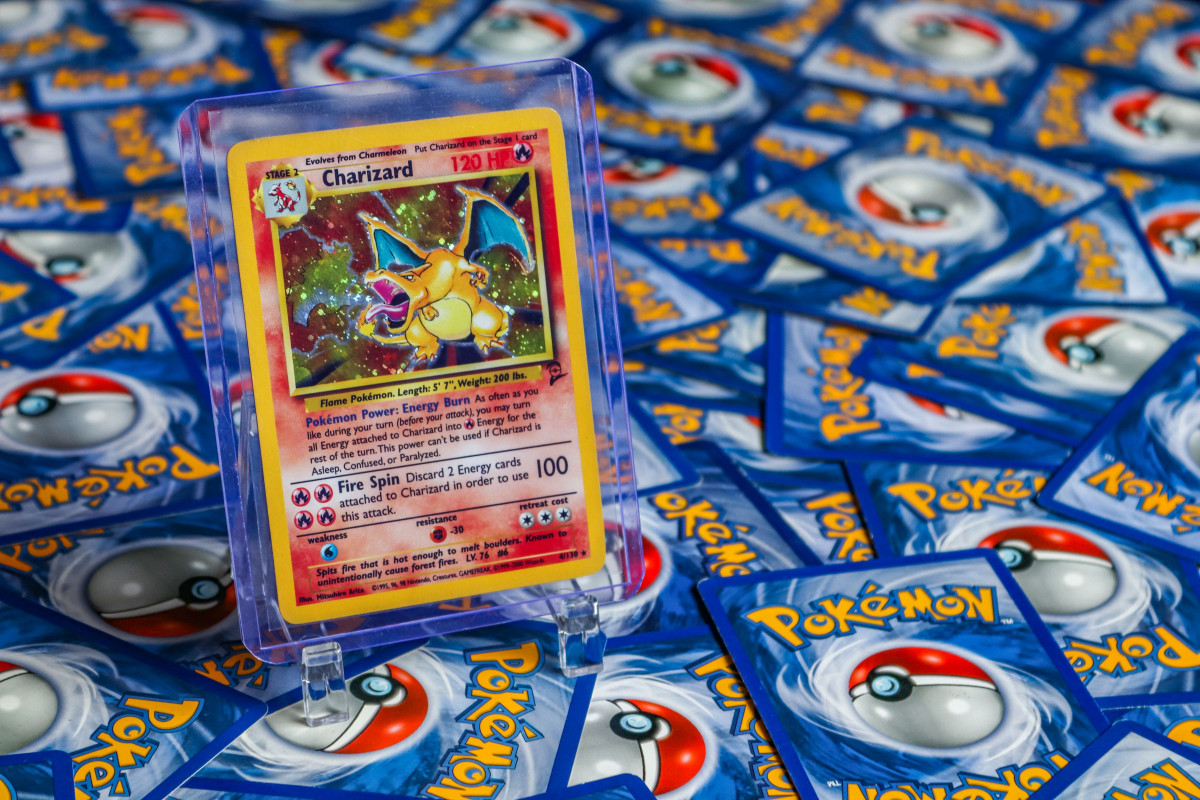
For decades, a Pokémon card was exactly what it appeared to be: a piece of cardboard produced for a children’s trading card game.
In 2026, that description is becoming increasingly inadequate.
Pokémon cards are being professionally authenticated, indexed, vaulted, traded across international marketplaces, used as alternative investments and increasingly bought without the owner ever physically touching them.
Some parts of the market have outperformed the stock market.
One data set examining 90 sealed Pokémon products between June 2021 and June 2026 found a median return of 238%, compared with 80.9% for the S&P 500. A separate index tracking 200 of the world’s most valuable Pokémon cards calculated a 213% increase from January 2020 through August 2026, versus 137% for the S&P 500 over the same period. Bitcoin remained far ahead at 784%, demonstrating that Pokémon’s performance should not be exaggerated into an argument that it beats every conventional asset in every period. (TCGinvest)
But returns may not be the most important part of this story.
The more consequential development is the infrastructure forming around those returns.
Because quietly, almost piece by piece, some of the world’s largest companies have started building what looks remarkably like a financial system for cardboard.
And sitting near the centre of it is a company most people still associate with selling video games.
GameStop.
If GameStop ultimately succeeds in acquiring eBay, the resulting company would not own Pokémon. It could not determine how many cards The Pokémon Company prints. It could not decree that a Charizard should be worth $5,000.
But it could potentially own or influence an extraordinary number of the places where the market decides what that Charizard is worth.
That distinction may prove far more important.
The $55.5 billion deal hiding a collectibles strategy
On May 3, 2026, GameStop made an unsolicited proposal to acquire eBay for $125 per share, valuing the equity at approximately $55.5 billion.
The proposed consideration was split 50% cash and 50% GameStop shares. GameStop said it had approximately $9.4 billion in cash and liquid investments at the time of the proposal and had received a highly confident financing letter from TD Securities for up to $20 billion. (SEC)
eBay rejected the offer nine days later, calling it “neither credible nor attractive” and pointing to financing uncertainty, operational risk, leverage and governance concerns. (eBay Investors)
GameStop did not simply disappear.
By August 1, the company owned approximately 43.4 million eBay shares, representing roughly 9.8% of the company, with a fair value at that time of approximately $4.9 billion. GameStop said it intended to hold the investment long term. (SEC)
Reuters reported in August that Ryan Cohen was considering withdrawing the takeover proposal and potentially pursuing a partnership or joint venture instead. There is therefore no binding GameStop-eBay transaction as of October 6, 2026. (Reuters)
This article is not arguing that the acquisition is inevitable.
It is asking a different question.
What happens to the Pokémon market if GameStop actually gets eBay?
The answer becomes far more interesting when you read GameStop’s own acquisition materials.
GameStop told investors that its approximately 1,600 U.S. stores could become a national network for authentication, intake, fulfilment and live commerce.
And among the three focus categories it specifically identified?
Trading cards. Collectibles. Refurbished technology. (SEC)
That is not speculation from Pokémon collectors.
That is GameStop’s own proposed blueprint.
GameStop is already becoming a collectibles company
The old description of GameStop as primarily a video-game retailer is becoming increasingly detached from its financial statements.
During the second quarter of fiscal 2026, GameStop generated $356.3 million in collectibles sales, up 57% year over year.
Collectibles represented 45.1% of total company sales during the quarter.
Video games generated $263.2 million.
In other words, in that quarter, GameStop generated more revenue from its broad collectibles category than from video games. (GameStop Investor Relations)
The category does include more than trading cards, but cards are becoming increasingly central to GameStop’s strategy.
Customers can already walk into participating GameStop stores and submit cards for PSA grading.
GameStop became an authorised PSA dealer through a collaboration with Collectors, the parent company of Professional Sports Authenticator. (GameStop Investor Relations)
GameStop also buys PSA graded cards directly from customers. Its current system accepts PSA 8, 9 and 10 cards and calculates real-time trade offers using a pricing model partly informed by data from Card Ladder. (GameStop)
And GameStop went another step in April 2026.
It launched Power Packs.
A customer can buy a digital pack, reveal a real PSA graded card, leave that card stored in the PSA Vault, have it shipped home, or sell it back instantly.
Pokémon was available at launch.
Pack prices ranged from $25 to $2,500. (GameStop Investor Relations)
Read that again.
A company best known for physical retail now offers a system where somebody can purchase an asset, reveal it digitally, maintain ownership while it remains in professional custody and sell it without ever taking physical possession.
That begins to sound much less like a traditional hobby shop.
It begins to sound like an exchange.
Now add eBay
This is where the hypothetical acquisition becomes potentially transformative.
eBay generated $79.6 billion in gross merchandise volume in 2025, with 135 million active buyers and approximately 2.5 billion live listings.
Collectibles were among the categories growing faster than the rest of its marketplace. (SEC)
More importantly, eBay describes itself as the world’s largest online marketplace for trading cards.
In 2025 alone, eBay.com users searched for Pokémon more than 360 times every minute. (eBay Inc.)
But the eBay logo is only the surface.
Underneath it sits an increasingly powerful collectibles ecosystem.
eBay owns TCGplayer, acquired for up to approximately $295 million in 2022.
TCGplayer serves millions of hobbyist buyers and tens of thousands of online sellers and physical card shops. Its Market Price system is calculated from actual recent transactions across its marketplace. (eBay Inc.)
eBay also owns Goldin, the high-end collectibles auction house it acquired from Collectors in 2024.
Goldin operates at the opposite end of the market from someone buying a €5 card.
Its speciality is trophy assets, ultra-rare cards and premium collectibles. Before eBay acquired it, Goldin had already facilitated more than $1.2 billion in sales. (eBay Investors)
So a GameStop acquisition of eBay would potentially place all of this beneath one corporate umbrella:
GameStop’s retail stores and trade-in network.
GameStop’s PSA grading intake.
GameStop’s graded-card inventory.
GameStop Power Packs.
eBay’s enormous global marketplace.
TCGplayer’s specialist trading-card marketplace.
Goldin’s premium auction business.
eBay Live.
eBay’s transaction history.
eBay’s trading-card price guide.
That is not simply another retailer becoming larger.
That is vertical integration across significant parts of an entire collectible’s life cycle.
The most powerful asset might not be the cards
The most valuable thing eBay possesses in the Pokémon market may not be its inventory.
It may be the data.
There is no New York Stock Exchange for Pokémon.
There is no official closing price for a PSA 10 Charizard.
There is no Pokémon central bank publishing the definitive value of an Umbreon.
Prices emerge through transactions.
And eBay sits on an enormous number of those transactions.
Its card Price Guide uses completed eBay sales, including accepted Best Offer prices, with data updated every 24 hours. The system can use up to two years of transactions when calculating comparable values. (eBay)
That data escapes the boundaries of eBay.
PriceCharting, another service widely used by collectors, explicitly says its pricing system collects sold-listing data from eBay and runs those transactions through its own algorithms. (PriceCharting)
This creates an enormous feedback loop.
A card sells repeatedly for $500.
Those transactions become comps.
Pricing systems identify approximately $500 as market value.
Sellers list around that level.
Dealers price inventory around it.
Buyers negotiate around it.
Future transactions reinforce or move the price.
The marketplace is not merely observing the market.
The marketplace is one of the places where the market is being created.
That is why saying a GameStop-eBay combination could “control Pokémon prices” is technically wrong.
The more sophisticated argument is potentially more significant.
It could control an extraordinary amount of Pokémon price discovery.
Owning the rails instead of owning Pokémon
The Pokémon Company ultimately controls the primary product.
As of March 2026, more than 85 billion Pokémon cards had been produced, with the game sold across more than 90 countries and regions. (The Pokémon Company)
GameStop cannot control that.
If The Pokémon Company decides to print another enormous wave of a modern set, it can affect scarcity regardless of what GameStop wants.
Independent stores remain important.
Cardmarket remains enormously relevant in Europe.
Fanatics, Whatnot, individual dealers, auction houses and thousands of local card shops provide competing routes to market.
Private transactions cannot be controlled by any central platform.
So “complete control” in a literal sense is impossible.
But financial markets demonstrate that you do not necessarily need to manufacture an asset to wield enormous influence over its ecosystem.
You can own the exchange.
The broker.
The market data.
The custody system.
The auction house.
The retail gateway.
The liquidity.
That is the more interesting possibility here.
A combined GameStop-eBay would not own Pokémon.
It could own a remarkable number of the rails upon which Pokémon’s secondary economy travels.
There is another connection worth examining
The structure becomes even more interconnected when PSA is added.
Collectors owns PSA, the PSA Vault and Card Ladder.
Collectors’ Chairman and CEO, Nat Turner, is also a member of GameStop’s board.
GameStop formally discloses Collectors and PSA as related parties because of Turner’s positions and GameStop’s commercial relationships with those businesses. GameStop’s board has also said Turner is not considered independent because of this relationship, while saying his collectibles expertise is important to the company’s expansion into the category. (SEC)
That does not mean GameStop owns PSA.
It does not.
But the commercial links are significant.
GameStop accepts grading submissions for PSA.
Its Power Packs were developed with PSA.
Those cards can live inside the PSA Vault.
Card Ladder data helps inform GameStop’s trade-in pricing.
And eBay itself has a major commercial relationship with PSA.
In 2024, eBay sold its vault business to PSA while acquiring Goldin from Collectors. The two companies simultaneously established integrations designed to let collectors grade, store and sell cards with less friction. A card in the PSA Vault can ultimately be transferred to another owner without leaving the vault. (eBay Investors)
This is starting to resemble a financial plumbing system.
Authentication establishes the asset.
Grading standardises it.
Market data values it.
Vaulting provides custody.
Marketplaces provide liquidity.
Digital pack products provide acquisition.
Retail stores provide physical intake and distribution.
The card itself becomes almost secondary to the infrastructure around it.
Pokémon has already started behaving like an asset class
There is a reason companies are building this infrastructure.
There is money in it.
A five-year analysis by TCGinvest looked at 8,881 individual cards and 90 sealed Pokémon products from June 2021 to June 2026.
The median sealed Pokémon product gained 238%.
The S&P 500 gained 80.9%.
The median raw Pokémon single gained only 38.3%.
That distinction is critical.
The “Pokémon market” is not one thing.
Sealed booster boxes, modern raw singles, vintage PSA 10 cards, Japanese promos and ultra-rare trophy cards have radically different economics.
But the performance of sealed product was extraordinary in that particular period. (TCGinvest)
TCGCharts provides another perspective.
Its Pokémon 200 index tracks 200 high-value cards weighted by estimated market value.
From January 1, 2020 to August 4, 2026:
Bitcoin returned 784%.
Its Grail 25 Pokémon index returned 236%.
The Pokémon 200 returned 213%.
Gold returned 172%.
The S&P 500 returned 137%.
Pokémon therefore beat the S&P in that comparison, although Bitcoin demolished everything. (TCGCharts)
There are important limitations.
The historical Pokémon index before its 2026 launch is backtested.
A Pokémon index cannot be purchased as cheaply as an ETF.
Collectors face spreads, shipping, authentication costs, grading fees, transaction fees and much lower liquidity.
Individual cards can collapse.
Modern products can be reprinted.
The broader Pokémon 200 suffered a roughly 39% drawdown from its previous peak, while the Grail 25 fell approximately 48%. (TCGCharts)
This is not a risk-free savings account disguised as Pikachu.
But it is becoming increasingly difficult to argue that Pokémon collectibles are economically irrelevant.
So how big is the Pokémon card market?
There is no universally accepted “market cap” for Pokémon because physical cards do not have a central securities depository recording every asset in existence.
But attempts to quantify it are becoming increasingly sophisticated.
As of October 6, 2026, TCGCharts estimates the market value of the PSA-graded Pokémon cards it tracks at approximately $11.47 billion, with $152.7 million of verified sales during the previous 30 days.
Its calculation uses graded populations multiplied by market pricing at each grade, rather than pretending every printed Pokémon card has meaningful market value. (TCGCharts)
That figure should not be confused with annual industry revenue.
Estimates for the entire global trading-card-game industry vary significantly depending on methodology. Global Market Insights estimated the worldwide trading-card-games market at $8.4 billion in 2025, while Straits Research estimated the broader collectible-card-games market at $14.7 billion. (Global Market Insights Inc.)
The exact number is debatable.
The direction is not.
This is a multibillion-dollar global economy.
And Pokémon sits near its centre.
Then Coinbase showed up
On September 28, Coinbase teased something extraordinary.
“Rip packs on your phone.”
Every pull would be backed by a physical card.
Customers could vault the card or have it shipped.
The promotional material clearly showed Pokémon-branded packs.
Coinbase has not yet disclosed a launch date, pricing, card checklist, storage fees or whether customers will eventually be able to sell their cards directly inside Coinbase. Those unknowns matter. (Covers.com)
But the direction is unmistakable.
Coinbase has spent years teaching millions of people to think about ownership through an interface.
Open application.
Select asset.
Buy.
Watch price.
Sell.
Custody stays somewhere else.
Now apply that behaviour to physical collectibles.
A future collector may never open a binder.
They may never hold their card.
They may own a graded Pikachu sitting inside a climate-controlled vault hundreds of kilometres away, monitor its estimated value through an application and transfer ownership to somebody else without the card ever moving.
That sounds radical until you realise GameStop already operates a version of it through Power Packs.
Coinbase entering this territory is therefore both a competitive threat and a validation of GameStop’s strategy.
One of America’s largest cryptocurrency platforms looked at the same collectible market and apparently concluded that digital acquisition plus physical custody was worth pursuing.
The boundaries between collecting, gambling-style pack opening, ecommerce and investing are beginning to blur.
What could this mean for GME?
For GameStop shareholders, the most bullish interpretation is enormous.
GameStop could cease being valued primarily as a shrinking legacy video-game retailer.
A successful eBay acquisition could turn it into something closer to a global marketplace and collectibles infrastructure company.
eBay generated $11.1 billion in revenue during 2025 from nearly $80 billion of GMV. It produced $2 billion in GAAP net income from continuing operations and $2 billion of operating cash flow. (SEC)
GameStop’s own collectibles business is already expanding quickly.
Combining its physical stores with eBay’s buyer network creates obvious possibilities.
A customer could walk into GameStop with a card.
GameStop could accept it.
PSA could grade it.
The card could enter a vault.
Market data could establish its value.
It could be listed on eBay.
Higher-end pieces could reach Goldin.
Raw cards could move through TCGplayer.
Digital inventory could be incorporated into Power Packs.
Stores could potentially become live-shopping studios, exactly as GameStop proposed in its own eBay presentation. (SEC)
That is a compelling strategic story.
The financial risk is equally enormous.
GameStop’s proposed acquisition was worth $55.5 billion, far larger than GameStop itself.
Half of the consideration was proposed in GameStop equity, meaning substantial issuance of new shares would be required.
GameStop shareholders approved an increase in authorised Class A shares from 1 billion to 2.5 billion in July, explicitly giving the company capacity for strategic transactions including the proposed eBay acquisition. (SEC)
A deal could therefore dramatically alter who owns GameStop.
It could also add meaningful financing risk.
The original acquisition proposal assumed a much larger pool of cash and liquid investments than GameStop had remaining by the end of its second fiscal quarter after building its eBay position.
As of August 1, GameStop reported $5.4 billion of cash, marketable securities and digital assets or related receivables, plus a $4.9 billion eBay investment. After a subsequent debt exchange, it expected long-term debt of approximately $2.8 billion. (SEC)
The question for GME investors is therefore not simply whether eBay is an attractive business.
It is whether GameStop can buy it without destroying the very shareholder value it hopes to create.
A successful integration could completely redefine GameStop.
A badly financed or poorly integrated takeover could overwhelm it.
Both outcomes deserve to be taken seriously.
The antitrust question nobody should ignore
There is another reason the Pokémon angle matters.
Any GameStop-eBay transaction would already require antitrust approval. GameStop acknowledged this in its acquisition filings. (SEC)
The regulatory discussion would extend far beyond Pokémon.
eBay operates in huge ecommerce markets.
But within trading cards, regulators could eventually face an unusual structure.
A retailer that buys cards from consumers could own the marketplace where comparable cards are sold.
That marketplace could own specialist card marketplace TCGplayer.
The same group could own high-end auction house Goldin.
Its stores could act as intake and fulfilment nodes.
Its own digital pack platform could acquire and resell inventory.
Its pricing systems could be informed by enormous pools of transactional data.
Again, none of this automatically constitutes anticompetitive behaviour.
There are substantial competitors.
But the potential conflicts are obvious enough to deserve scrutiny.
Would GameStop products receive preferential visibility?
Would competing card shops receive equal access?
Could marketplace transaction data provide GameStop’s own buying operation with advantages unavailable to independent retailers?
How would pricing algorithms remain neutral?
How would TCGplayer’s independent sellers view a parent company that also buys and sells the same products?
These questions would become increasingly important as Pokémon becomes more financialised.
What happens to independent sellers?
This story is not only about billion-dollar companies.
At the bottom of the infrastructure sit thousands of small businesses buying boxes, importing products, attending card shows and trying to work out what collectors will actually pay.
Take an independent retailer such as PullCove, an Irish collectibles business focused on sealed Pokémon products.
A business like PullCove does not determine the global price of a Japanese booster box.
It observes the market.
It checks eBay.
It watches European pricing.
It considers scarcity, landed cost, availability and demand.
Then it decides where it can compete.
If more of the global pricing infrastructure consolidates underneath GameStop, small retailers could benefit from deeper liquidity, better authentication and more transparent data.
But they could also become increasingly dependent on a pricing system controlled by one enormous participant.
That is the paradox.
Better market infrastructure can help small businesses participate.
Too much concentration can turn those same businesses into price takers.
Coinbase versus GameStop may be the battle to watch
Coinbase’s arrival creates another possibility.
Perhaps the future Pokémon market will not be dominated by card shops at all.
Perhaps it will be dominated by platforms.
GameStop has stores, PSA integration, Power Packs and a large collectibles business.
Coinbase has financial infrastructure, custody expertise, digital-native users and an ambition to become what it calls an “Everything Exchange.” (Coinbase)
eBay has marketplace liquidity.
TCGplayer has specialised card commerce.
Goldin has premium auctions.
PSA has authentication, grading and vaulting.
The companies racing to dominate collectibles increasingly resemble the institutions surrounding financial assets.
The prize is not just selling booster boxes.
The bigger prize is capturing a fee every time ownership changes.
The market may eventually trade without the cards moving
This could be the end state.
Imagine a PSA 10 card stored permanently inside a vault.
Investor A owns it.
Investor A sells it to Investor B.
The card does not move.
Investor B sells it to Investor C.
Still no movement.
Each transaction establishes a new market price.
Each transaction generates marketplace data.
Each transaction can generate fees.
The physical card effectively becomes the reserve asset backing a digital ownership record.
This is already technically possible in parts of the hobby.
eBay states that when a card stored in the PSA Vault is purchased and the buyer elects to keep it there, ownership is transferred instantly. (eBay)
At that moment, the economic behaviour begins to resemble securities custody far more than somebody swapping cards at school.
That does not make Pokémon cards securities.
It means the infrastructure surrounding them is converging with infrastructure people already understand from financial markets.
And the supply cannot simply disappear
There is another characteristic that makes Pokémon uniquely powerful.
The brand has been producing cards for three decades.
New collectors can buy contemporary products for relatively little money.
Serious collectors can buy sealed vintage boxes for thousands.
At the extreme end, trophy cards can trade for millions.
That creates something resembling a financial market’s risk curve.
Cheap entry assets.
Mid-market assets.
Blue-chip collectibles.
Ultra-scarce trophy assets.
Different languages.
Different regions.
Different generations.
Different levels of liquidity.
The Pokémon Company has now produced more than 85 billion cards, but scarcity can still exist at the individual printing, promo, grade or sealed-product level. (The Pokémon Company)
That combination of mass participation and manufactured scarcity is extraordinarily difficult for a new collectible franchise to recreate.
But this can still go badly wrong
There is a temptation to look at the charts and conclude that Pokémon simply goes up.
History says otherwise.
The Pokémon 200 index experienced years of decline following the 2020 boom before recovering.
Individual modern cards routinely collapse.
Products can be reprinted.
Population reports can explode when collectors submit thousands of copies for grading.
Liquidity can disappear when sentiment changes.
PSA itself became so overwhelmed by demand in 2026 that its active backlog approached 10 million cards and lower-cost submission tiers were temporarily paused. At one point its backlog rose above 12 million items. (Professional Sports Authenticator (PSA))
There are also behavioural questions.
Digital pack opening makes purchasing frictionless.
Frictionless speculation can encourage participants to spend faster than they would in a physical shop.
If platforms eventually combine pack opening, instant valuation and immediate resale, the psychological distance between collecting and trading becomes very small.
The companies building these systems will eventually need to confront those questions.
The real GameStop thesis
For years, the market asked the same question about GameStop:
How does a physical video-game retailer survive when games become digital?
Perhaps that was the wrong question.
Maybe GameStop does not intend to remain primarily a video-game retailer.
Its financial statements are already pointing elsewhere.
Collectibles accounted for 45.1% of quarterly sales.
It accepts PSA submissions.
It buys graded cards.
It operates digital packs backed by real vaulted assets.
Its board includes the CEO of Collectors.
It owns nearly 10% of eBay.
It tried to buy the entire company.
And when it explained to investors what it wanted to do with eBay, trading cards were explicitly part of the plan.
Viewed individually, each development looks interesting.
Viewed together, they look like a strategy.
The juggernaut nobody is talking about
The Pokémon card market is no longer just children, collectors and people opening booster packs for fun.
It is becoming a sophisticated alternative-asset economy.
There are indexes.
There are market makers in everything but name.
There are price feeds.
There are professional graders.
There are authentication systems.
There are vaults.
There are global marketplaces.
There are instant trade offers.
There are high-end auction houses.
There are digital packs backed by physical assets.
And now one of the largest crypto exchanges in America wants in.
The most important battle in Pokémon may therefore have very little to do with which company can sell the most booster boxes.
It may be about who owns the infrastructure underneath the cards.
If GameStop ever succeeds in acquiring eBay, it would inherit the world’s largest online trading-card marketplace, TCGplayer, Goldin, enormous transaction datasets and a vast global buyer base.
Add GameStop’s physical retail network, its rapidly growing collectibles business, PSA relationship and Power Packs platform, and something remarkable begins to emerge.
Not a monopoly over Pokémon itself.
Something subtler.
Potentially, something more valuable.
A company sitting between the collector and the card at almost every point where economic value is created.
The Pokémon Company would still print the cardboard.
Collectors would still decide what they love.
Markets would still ultimately decide what something is worth.
But GameStop could be sitting there when the card is submitted, graded, priced, vaulted, bought, sold, auctioned, digitally revealed and physically delivered.
That is as close to owning the rails of a collectible economy as any company has yet come.
And if Pokémon continues its transformation from childhood hobby into a multibillion-dollar alternative asset market, those rails could ultimately be worth far more than the cardboard travelling across them.
What's Your Reaction?
 Like
5
Like
5
 Dislike
0
Dislike
0
 Love
5
Love
5
 Funny
0
Funny
0
 Wow
3
Wow
3
 Sad
0
Sad
0
 Angry
0
Angry
0

Jane specializes in uncovering hidden market manipulation schemes and investigating hedge funds’ controversial practices. She exposes insider trading and regulatory loopholes in the financial world.








Comments (0)