
DOJ Releases 3.5 Million Epstein-Related Pages: What’s Included, What’s Redacted, and Why It Matters
DOJ says it published 3.5M Epstein-related pages, plus videos and images. We break down what’s included, what’s withheld, and what to watch next.
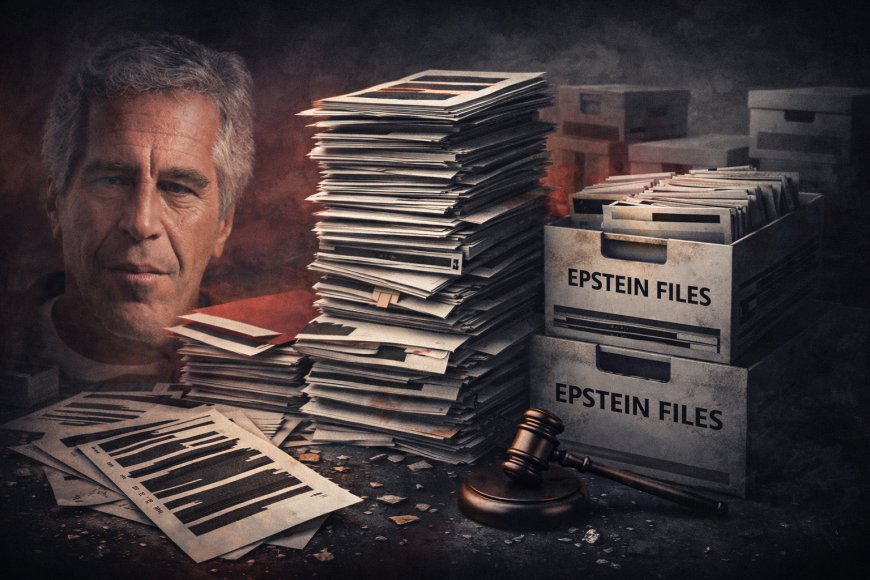
The U.S. Department of Justice says it has completed its obligations under the Epstein Files Transparency Act, announcing the publication of nearly 3.5 million “responsive” pages alongside more than 2,000 videos and about 180,000 images.
The release lands in a political and legal minefield: Congress mandated disclosure, courts imposed privacy constraints, and the DOJ is openly warning that the production includes material of uneven reliability, including items submitted to the FBI by the public that may be fabricated or false.
What the DOJ says it released
In its press release and a companion letter to Congress, DOJ frames the release as the product of an unusually large review effort, involving more than 500 attorneys and reviewers. The Department says it over-collected material to avoid missing responsive records, identifying more than 6 million pages as potentially responsive during collection, then releasing over 3 million responsive pages in this tranche (and nearly 3.5 million pages total when combined with prior releases).
DOJ describes the released material as pulled from multiple buckets tied to historic investigations and prosecutions, including the Florida and New York cases involving Jeffrey Epstein, the New York case involving Ghislaine Maxwell, investigations into Epstein’s death, and multiple FBI/Inspector General-related components.
The files are hosted on DOJ’s “Epstein Library,” which includes warnings about sensitive content and notes that not all documents are reliably searchable due to format limitations (e.g., handwritten items).
What was withheld or redacted — and why
DOJ says it limited redactions primarily to protect victims and their families, and to comply with legal constraints. It lists several categories of material that were not produced or were withheld/redacted, including:
- Victim-identifying information and certain private/medical information
- Child sexual abuse material (CSAM)
- Items that could jeopardize an active federal investigation or ongoing prosecution (narrowly tailored and temporary)
- Depictions of death, physical abuse, or injury
- Material withheld under privileges (e.g., deliberative process, work-product, attorney-client)
In the letter to Congress, DOJ quantifies privilege-based withholding/redaction at approximately 200,000 pages and says it will submit a formal report to the House and Senate Judiciary Committees within 15 days listing categories released/withheld and summarizing redactions, including a list of government officials and politically exposed persons referenced in the released materials.
The court-order constraint most people will miss
A key operational detail: DOJ says the U.S. Attorney’s Office for the Southern District of New York used an additional review protocol to comply with a court order requiring the U.S. Attorney (named in the DOJ materials) to certify that victim-identifying information would not be produced unredacted. In practice, DOJ describes multiple “layers” of review and quality control, including specialized second-level review teams.
This matters because it helps explain why the release is heavy on redactions and why DOJ is positioning privacy protection as the dominant constraint.
DOJ’s warning: the dump includes unreliable submissions
One of the most consequential lines in DOJ’s press release is its warning that the production may include fake or falsely submitted items, because “everything that was sent to the FBI by the public” and deemed responsive was included. The DOJ specifically notes that some documents contain “untrue and sensationalist claims” that it says are unfounded.
That warning is not a throwaway. It is the DOJ preemptively telling readers: don’t treat every file as verified evidence. In practical terms, the release appears to mix primary investigative materials with third-party noise, the kind of environment where misinformation travels faster than fact.
Why this is already contentious
The release drew criticism, including objections that some internal communications were withheld and that lawmakers argue additional material should have been disclosed under the act. DOJ, for its part, emphasizes legal privileges and victim-protection obligations as justification for what was not produced.
This is the core tension: Congress mandated a broad public disclosure regime, but DOJ is asserting guardrails via privacy law, court orders, active-investigation exceptions, and privilege doctrines. That tension is likely to keep generating secondary headlines long after the initial “millions of pages” shock fades.
How to read this release responsibly
If you’re approaching this as an investigator, journalist, analyst, or citizen, the disciplined approach is:
- Separate source types: court filings and authenticated records are not the same as tips, uploads, or third-party submissions. DOJ itself flags this risk.
- Treat redactions as signals, not proof: a redacted name might be a victim, a private individual, or something privileged — it isn’t automatically evidence of a cover-up.
- Expect inconsistencies: DOJ explicitly says inconsistencies may exist in how redactions were applied due to scale and manual review.
- Watch the promised report: the “within 15 days” report to Congress is where the most structured accounting should appear (categories withheld, legal basis, referenced officials/PEPs).
DOJ’s release is enormous in volume and historic in sensitivity, but its value will depend on what analysts do next: validating provenance, mapping connections across datasets, and resisting the incentive to turn raw documents into instant narratives. The Department is simultaneously declaring compliance and building a legal/operational rationale for why “full transparency” still comes with redactions, exceptions, and a lot of messy material that was never tested in court.
What's Your Reaction?
 Like
0
Like
0
 Dislike
0
Dislike
0
 Love
0
Love
0
 Funny
0
Funny
0
 Wow
0
Wow
0
 Sad
0
Sad
0
 Angry
0
Angry
0

Jane specializes in uncovering hidden market manipulation schemes and investigating hedge funds’ controversial practices. She exposes insider trading and regulatory loopholes in the financial world.









Comments (0)