
AMC Needs a New Business Model, Not a Bigger Screen
What if AMC could greenlight movies using real ticket demand before they’re made? A new “demand-locking” model could reduce risk, strengthen negotiating power, and create new revenue streams.
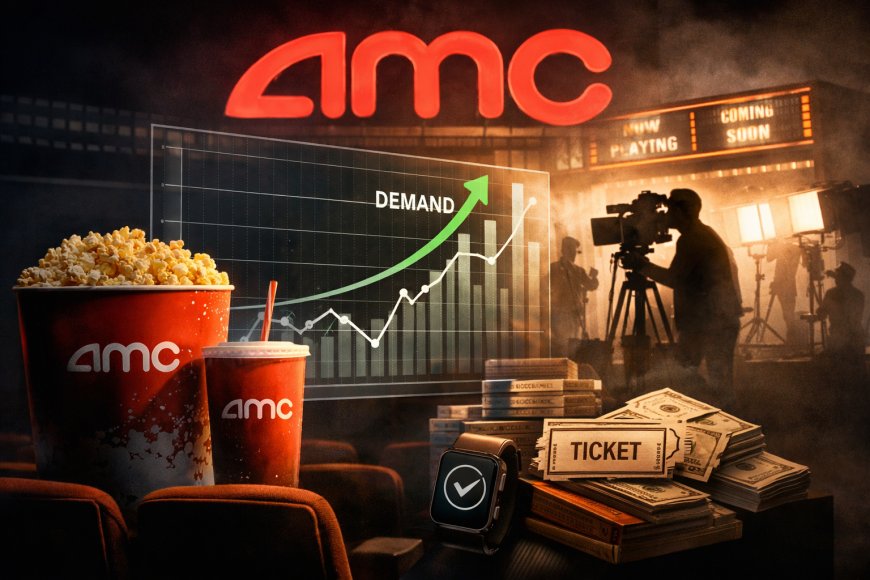
AMC doesn’t need a bigger screen. It needs a bigger role.
For two decades, the cinema business has been valued like a utility: ticket sales in, rent and labor out, and whatever margin is left depends on a slate of films no theater chain controls. That model worked when movies were the unquestioned center of home entertainment. In a world of infinite streaming choice, it has become a business that must absorb the risk of cultural volatility without owning much of the upside.
AMC’s predicament is often framed as a balance-sheet story—debt, refinancing, and the long hangover of a pandemic that trained consumers to stay home. But the underlying strategic problem is simpler: theaters are largely paid after studios take the first bite, and they are exposed to demand swings that they can’t forecast with precision and can’t hedge.
If AMC wants a credible narrative beyond “more premium formats and better popcorn,” it needs to stop acting like the final checkpoint in the content supply chain and become something closer to a gatekeeper of demand.
There is a way to do that, one that would be difficult for streamers to replicate and uncomfortable for studios to ignore.
Call it the AMC Greenlight Market: a platform where audiences pre-commit to films and event content before they are produced, creating a pool of verified demand that can finance projects, de-risk distribution, and give AMC an ownership-like participation in the very content that fills its screens.
The conceptual leap is not crowdfunding in the Kickstarter sense. It is demand locking turning the cinema ticket from a last-minute purchase into a forward contract on attention. Consumers don’t “donate”; they place refundable “ticket locks” inside AMC’s app, reserving admission for projects that meet a threshold of support. If a project hits the threshold, the credit converts to tickets, premium seating, exclusives, or opening-night experiences. If it fails, the credit is refunded.
In other words, AMC would not ask fans to gamble on art. It would ask them to pre-order an event.
The implications are meaningful because theatres sit on an asset that streaming giants can’t easily manufacture: verified, high-intent attendance at physical scale. A view on a streaming platform can be passive, algorithmic, or inflated by autoplay. A cinema ticket is a purchase that forces intention and a willingness to leave the house. If AMC can aggregate that intent early months before production or marketing budgets are locked, it can change who bears risk in entertainment.
Studios would dismiss this as a gimmick until they see the first data.
A demand-locking marketplace would generate insight that makes current audience analytics look soft: how many people will pay in advance, at what price point, in which cities, with what sensitivity to casting announcements, trailers, or genre conventions. It would show the difference between social media noise and actual purchase intent. That dataset, because it’s tied to real money and real showtimes, would be valuable enough to reshape negotiating leverage.
It could also reshape AMC’s revenue model, which has long been limited by its place in the value chain.
Today, AMC earns from tickets, concessions, and occasional distribution arrangements for special events. Under a demand-locking model, AMC could add at least four scalable streams.
First, platform economics. If AMC curates projects and takes a small fee only when a project crosses its greenlight threshold, it builds a transaction layer that is not directly dependent on weekly box office volatility.
Second, distribution participation. Hitting a demand threshold could trigger a pre-negotiated distribution deal where AMC, having de-risked opening weekend through presales, secures a better margin, performance bonuses, or rights participation. Even modest participation across multiple projects creates a portfolio effect, something theatres rarely enjoy.
Third, premium experiences. Demand-locking naturally sells high-margin add-ons: opening-night bundles, Q&A events, limited collectibles, “fan credit” placements, and member-only screenings. This is where theatrical can outcompete streaming: scarcity, community, and the sense of occasion.
Fourth, loyalty monetization. A-List becomes more than a discount plan; it becomes an access layer. Members could get earlier access to greenlight listings, lower pledge thresholds, better seating windows, or voting privileges on which concepts advance. That turns membership into infrastructure rather than promotion and reduces churn in a way that price cuts never will.
Creators would have strong incentives to participate, especially outside the traditional studio system. For independent filmmakers, anime producers, comedians, and niche documentary teams, the most punishing part of the business is uncertainty: you can make a project, but you cannot guarantee distribution or a meaningful launch. Demand-locking offers a different promise: prove your audience exists, and a theatrical window arrives pre-sold.
That could open a new lane of “cinema-first” content that studios have neglected: micro-budget horror that thrives on communal reaction, stand-up specials that benefit from a live audience, diaspora-focused films that can be targeted city by city, and limited-run event series pilots that audiences effectively commission through presales.
None of this is without risk. A greenlight marketplace could become a low-quality content dump, a marketing circus, or a refund-management headache. It could also trigger legal scrutiny if it blurs into financial participation. But those risks are manageable with design choices: strict curation, refundable consumption credits rather than profit-sharing, transparent deadlines, identity verification, and a phased rollout that begins with event cinema where production timelines are short and delivery risk is low.
The biggest resistance would come from the incumbents’ studios and streamers because a transparent demand market undermines their advantage: control over what gets made and how success is measured. Hollywood has long relied on opacity, narrative, and marketing muscle to create inevitability around projects. A marketplace that shows raw purchase intent in real time would reprice that power.
Which is precisely why AMC should pursue it.
The chain’s long-term vulnerability is not that consumers don’t like movies; it’s that AMC has been stuck as a downstream participant in an upstream business. The only durable escape is to move upstream without trying to become a traditional studio by becoming the entity that makes demand legible, tradable, and actionable.
If AMC can build a system where audiences effectively “order” content into existence, it will have created a new category: the demand-locked distributor. That is a strategy Wall Street can model, lenders can understand, and competitors can’t easily copy without owning thousands of screens.
In a market obsessed with content supply, the scarce asset is no longer production capacity. It is guaranteed attention.
AMC has the physical network where attention still shows up in person. The question is whether it has the imagination to turn that network into a demand engine that doesn’t just play the next movie but helps decide what the next movie is.
What's Your Reaction?
 Like
0
Like
0
 Dislike
0
Dislike
0
 Love
0
Love
0
 Funny
0
Funny
0
 Wow
0
Wow
0
 Sad
0
Sad
0
 Angry
0
Angry
0

Blockchain Development, DeFi, Bitcoin Economics








Comments (0)